



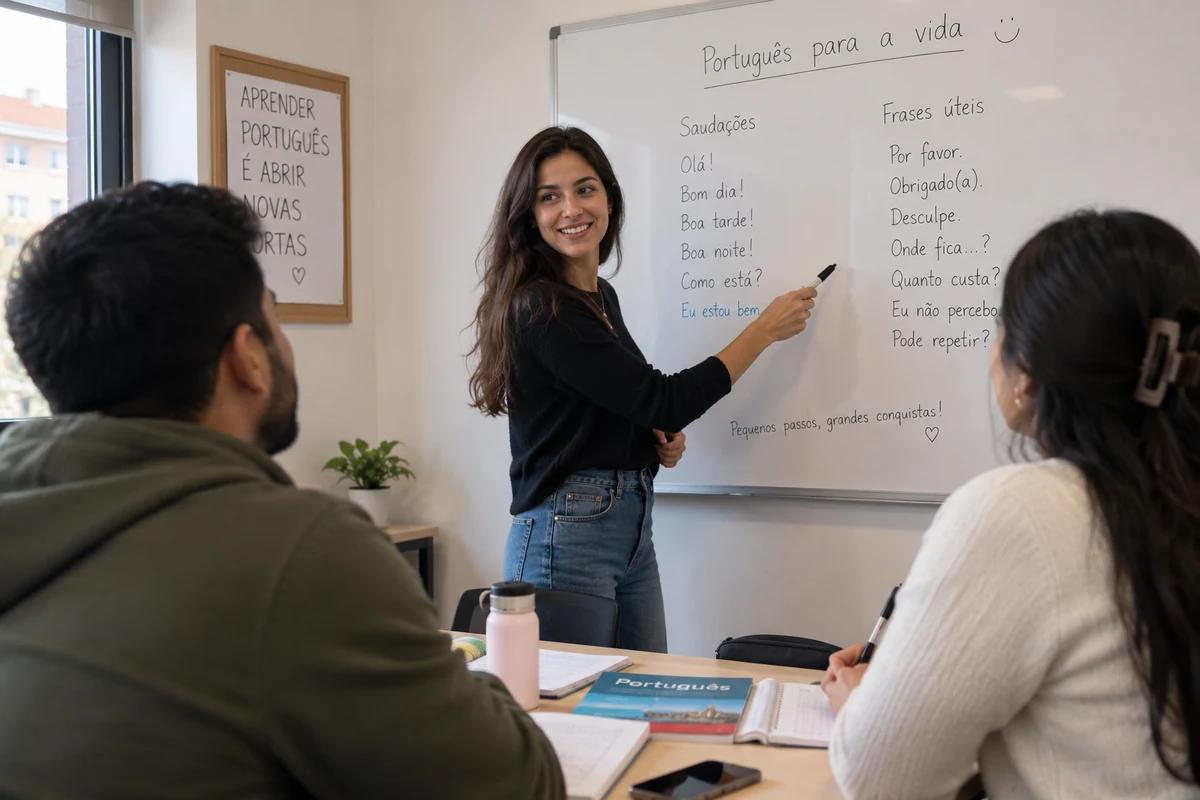
Moving to Portugal is an exciting life milestone, offering safety, warmth, and vibrant culture. However, achieving true independence, securing high-quality employment, and building deep relationships requires one essential skill: mastering European Portuguese (Português de Portugal).
Why European Portuguese is Unique
While Portuguese is spoken by over 260 million people globally, European Portuguese has distinct pronunciation characteristics, grammatical structures, and everyday expressions that differentiate it from other variants:
- Vowel Reduction: Unstressed vowels are frequently shortened or swallowed (closed vowel system), which can make spoken European Portuguese sound rhythmic and fast to new learners.
- Pronoun Placement (Enclisis): In Portugal, pronouns naturally attach to the end of verbs in standard statements (e.g., “Chamo-me” rather than “Me chamo”).
- Formality Distinctions: European Portuguese maintains clear everyday distinctions between informal treatment (“Tu”) and polite formal address (“O senhor / A senhora”).
Core Foundations for Rapid Fluency
To transition from a beginner to a confident speaker, focus on these four pillar strategies:
1. Master Everyday Survival Vocabulary
Begin with practical, high-frequency phrases used in local markets, cafés, public transport, and clinics. Understanding how to ask “Quanto custa?” (How much is it?), “Onde fica?” (Where is it located?), and “Podia ajudar-me, por favor?” (Could you help me, please?) gives you immediate confidence.
2. Understand the Difference Between Ser and Estar
Both verbs translate to “to be” in English, but they carry fundamentally different meanings:
- Ser: Permanent characteristics, identity, nationality, and origin (e.g., “Sou estudante”, “Lisboa é bonita”).
- Estar: Temporary states, conditions, emotions, and physical location (e.g., “Estou cansado”, “Estou no Barreiro”).

3. Immerse in Real-World Listening
Listen to local Portuguese radio (RTP, Antena 1), watch news broadcasts with Portuguese subtitles, and practice reading street signs, local newspapers, and supermarket circulars. Daily exposure accelerates ear training.
4. Enroll in a Certified Structured Language Program
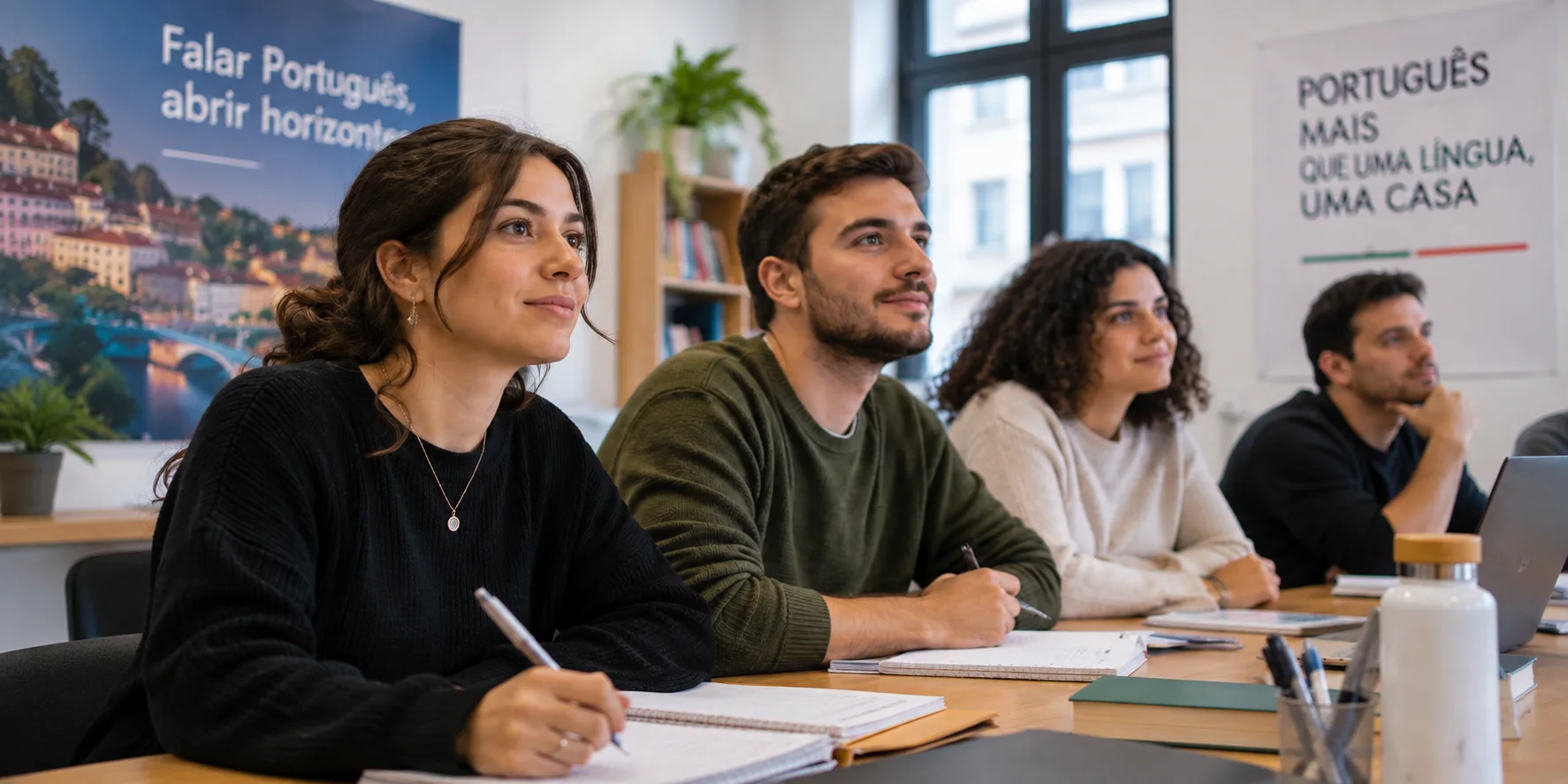
While self-study apps provide vocabulary drills, true conversational fluency requires structured classroom interaction, guided pronunciation feedback, and certified curriculum standards.
How Escola Nova De Língua Empowers Your Journey
At Escola Nova De Língua in Barreiro, our European Portuguese programs are tailored specifically for international residents, job seekers, and citizenship applicants:
- Official PLA Certification: Courses recognized for legal residency and nationality requirements.
- Communicative Methodology: Interactive, conversation-first lessons taught by native accredited instructors.
- Multilingual Student Support: Dedicated guidance in Portuguese, English, Hindi, and Bengali to ensure every student succeeds.
Ready to start your journey? Explore our Portuguese Language Course A1-A2 or contact our admissions team today.